Guess the Songs, Quiz
PROJECT HOUSE MYANMARTrivia
4.5119.00 Reviews
- Version
- 4.5.0
- Installs
- 1.00M
- Age Rating
- Everyone
Screenshots
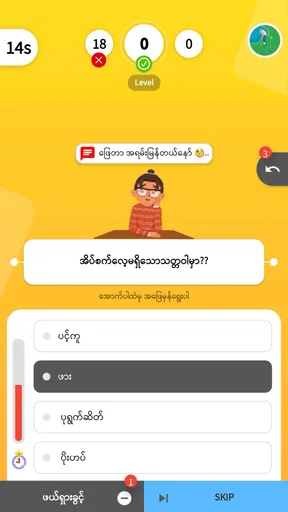
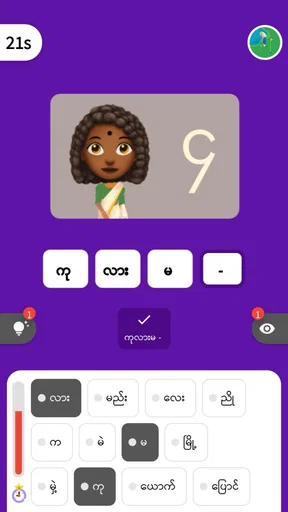
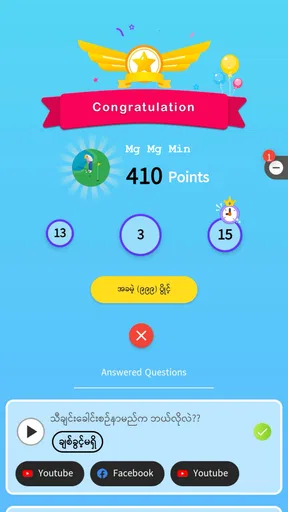
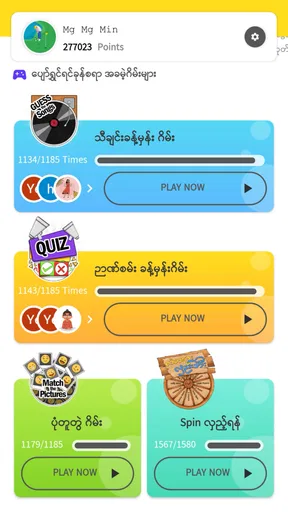
Our Review of Guess the Songs, Quiz
 Analysis by Appyee
I enjoy trivia games most when they give me a clear reason to play one more round without turning the experience into a complicated project. Guess the Songs, Quiz takes a simple route: it tests how quickly I can recognize music and invites me to compete with friends. That focus makes it easy to understand within moments, but it also means the quality of the experience depends heavily on the range of songs, the way questions are presented, and whether the challenge keeps feeling fresh.
After spending time with it, I see this as a casual music trivia game rather than a deep music-learning tool. It works well for short sessions, friendly challenges, and those moments when a group wants something more interactive than casually naming songs aloud. It is free, rated for Everyone, and developed by PROJECT HOUSE MYANMAR. The game has reached over a million installs and holds a 4.5 average from around nineteen thousand ratings, which gives it a reassuring level of visibility among people looking for this kind of quick quiz.
How the first rounds establish the goal
The early objective is immediately understandable: listen, remember, and guess the song. There is no need to study a rulebook or learn a complicated control scheme. That accessibility is one of the strongest parts of the design because the game can be handed to a friend who has never seen it before, and the basic challenge makes sense almost instantly.
I particularly like the way the central goal creates a natural split between confidence and hesitation. Sometimes a melody or vocal line is obvious, and the satisfying response is to answer quickly. Other times I recognize the style but not the title, so I have to decide whether my memory is reliable enough to commit. That small decision gives otherwise simple questions a little tension.
For a solo player, the goal is personal improvement: recognize more songs, make fewer guesses, and become faster at connecting a musical clue with a title. For a group, the same structure becomes social. Friends can challenge one another’s memory, compare answers, and discover who knows popular songs better than expected. The game’s short-description promise of guessing songs is straightforward, but the social angle is what gives that idea practical value.
A useful way to approach the first session is not to treat every missed answer as a failure. I found it more enjoyable to notice which kind of mistake I was making. Was I confusing two artists, remembering a chorus but not the title, or recognizing a song only after seeing the answer? Those distinctions help reveal whether the game is testing recall, familiarity, or speed for you personally.
The best early goal is not simply getting everything right; it is learning how your own music memory behaves. That makes the opening rounds more useful and prevents the experience from becoming a string of disconnected guesses.
Why the opening is friendly to groups
Guess the Songs, Quiz is especially approachable when several people are playing together. One person can operate the device while everyone else answers, or players can take turns making their choices. Because the premise is familiar, the game does not consume the first part of a gathering explaining itself.
That simplicity also creates a limitation. Players who want a large collection of modes, elaborate avatars, or a story-driven reason to continue may find the opening too bare. This is a focused trivia experience, and its early appeal comes from the song-recognition question rather than from a broad collection of supporting systems.
In everyday use, I can imagine opening it during a short break with a friend, playing a few rounds while waiting for food, or using it as a light activity at a small get-together. It does not demand the kind of uninterrupted attention that a longer strategy game needs. At the same time, it is more engaging than simply asking each other random music questions because the game supplies the structure and the pressure to answer.
What progress feels like during repeated play
Progress in a song quiz is less about building a character or collecting equipment and more about seeing whether my knowledge improves. That can be satisfying, but it is also a subtler form of progression. The important signals are successful recognition, quicker answers, and a growing awareness of which musical areas are comfortable or unfamiliar.
I recommend paying attention to near-misses. If I identify a song only after thinking for a long time, that still tells me something: the memory exists, but the retrieval is slow. If I know the tune but repeatedly forget the title, the issue is different. Treating those outcomes separately makes each session feel more informative than a simple win-or-lose result.
Playing with friends adds another progress signal. A player may not improve in a formal ranking sense, but they can become the person who recognizes older tracks, catches songs from a particular style, or answers before everyone else. Those informal roles are valuable because they make repeated sessions feel personal. The game becomes a way to compare musical memories rather than only a test with a final score.
There is a trade-off here. A dedicated trivia fan may want highly visible long-term goals, detailed performance records, or a carefully structured ladder of achievements. I would not choose this game primarily for that kind of progression. Its appeal is more immediate: each round gives feedback through the answer itself, and the motivation comes from wanting to perform better next time or beat the people nearby.
One practical tip is to alternate between solo and group play. Solo sessions expose gaps in memory without the distraction of other people’s guesses. Group sessions reveal how recognition changes under pressure. A song that feels impossible alone may become obvious when someone hums the rhythm, while an answer I knew privately may disappear when everyone starts shouting different possibilities.
Unlocks, challenge, and the value of a short session
The game’s strongest retention tool is the challenge of recognition itself. Every new question asks whether I can connect a musical clue to the correct title, and that basic uncertainty can be enough to encourage another attempt. I do not need a complicated reward structure to understand why I want to continue: I want to recover from a miss, confirm a guess, or prove that I can outscore a friend.
However, this kind of motivation is naturally dependent on variety. If the same material appears too often, the challenge changes from remembering music to remembering the quiz’s previous answers. That can reduce the satisfaction of a correct response. The game is at its best when the answer feels like a genuine act of recognition rather than a memorized screen.
The pacing suits players who prefer compact bursts. I can approach it as a few-minute diversion instead of committing to a long campaign. That makes it a good companion for waiting rooms, commutes when I am not driving, or relaxed evenings when I want a game that starts quickly.
The same pacing may feel limited to players who expect a substantial session with escalating objectives. If you want a trivia game that builds toward a complex tournament structure or offers a large set of distinct activities, a broader quiz app may be a better fit. Guess the Songs, Quiz earns attention through a narrow but understandable loop, so its success depends on whether that loop is enough for you.
Difficulty: where memory turns into pressure
The difficulty of a song quiz is personal. A track that is instantly recognizable to one player may be completely unfamiliar to another, so the experience can feel uneven in a mixed group. I consider that part of the charm, but it can also create frustration when one person’s musical background gives them a consistent advantage.
Rather than judging difficulty only by the number of correct answers, I look at how the game makes uncertainty feel. Easy questions create momentum and build confidence. Harder ones slow the group down and invite discussion. A good session needs both: too many obvious answers become routine, while too many obscure ones make players feel that success depends on luck or a narrow taste in music.
For mixed-age groups, the Everyone content rating makes the game approachable as a family-friendly choice. Still, age does not guarantee equal knowledge. I would make the experience fairer by letting different players take the lead in different rounds, rather than assuming that the person with the fastest response is always the strongest player.
Another useful tactic is to avoid shouting the first guess immediately. In a group, the loudest answer can influence everyone else, even when it is wrong. Giving each player a moment to form an independent answer makes the challenge more meaningful and prevents one confident guess from deciding the round for everybody.
There is also a difference between a difficult question and a poor question. A difficult one makes me think of several possibilities before I settle on the right song. A poor one leaves me with no useful connection at all. When the game tests recognition, it needs enough familiarity for the player to feel that an answer was possible. That distinction is important when deciding whether the difficulty is motivating or merely tiring.
Who will enjoy the challenge most
This is a strong match for people who already enjoy music conversations, friendly competition, and quick trivia rounds. It is also suitable for casual players who do not normally play games because the main skill is familiar: remembering songs. Someone who wants to improve recall, test a broad playlist, or find out which friend has the best musical memory should find a clear reason to try it.
I would be more cautious about recommending it to players who dislike guessing or who need precise, predictable progression. It may also be a poor choice for someone looking for music discovery, because recognizing songs and learning new artists are not the same activity. A music-streaming service or a dedicated educational music app would serve that purpose better.
People who are sensitive to repeated content should also approach it with realistic expectations. The core question format is intentionally simple, and repetition is an unavoidable risk in any focused guessing game. The right question is not whether the game has endless depth, but whether the act of testing your memory remains enjoyable across your typical session length.
What keeps people returning, and where the pressure fades
The social challenge is the most convincing reason to return. Beating a friend creates a memorable result, and losing can make the next round feel necessary. Unlike a solitary score that disappears when the app closes, a friendly rivalry gives the game a small story: who knew the answer, who guessed too quickly, and who improved after a rematch.
That pressure works best when nobody takes the result too seriously. Because music knowledge varies so much, a score does not necessarily measure general intelligence or even overall trivia ability. It measures familiarity with the songs represented in the round and the player’s ability to retrieve that knowledge at the right moment.
For solo play, retention is more fragile. The game can still be enjoyable when I want a quick mental warm-up, but I need to supply my own reason to continue. I might set a personal goal of answering without hesitation, try to reduce careless guesses, or use a session to identify which titles I repeatedly confuse. Without that self-imposed purpose, the simple loop can lose energy sooner than it does in a group.
One of the most useful workflows is to play in two passes. During the first pass, I answer naturally and accept the result. During the second, I focus on the songs that caused hesitation and try to describe what I remembered: the melody, a vocal phrase, the rhythm, or the general era. This turns a casual game into a small memory exercise without pretending that it is a formal learning course.
Another trade-off involves competition and accessibility. A fast player may enjoy the pressure of answering immediately, while a less confident player may need more time to feel involved. In a group, I would rotate who answers first or let everyone write down a guess before revealing it. That simple adjustment keeps the game from becoming a performance by one person while everyone else watches.
The free price lowers the barrier to experimenting with it. I can recommend trying it for a gathering without asking friends to buy into a complicated setup. The current version is 4.5.0, and it runs on Android devices using version 6.0 or later, so compatibility is worth checking before installing on an older phone.
How it compares with ordinary alternatives
The obvious alternative is asking friends to name songs without using an app. That approach is more flexible because people can choose any music they want, but it also depends on someone preparing questions and keeping the game fair. This title is more convenient when I want the quiz structure ready to use.
A general trivia app may offer more subjects, broader categories, and a stronger sense of formal progression. That makes it better for players who want variety beyond music. Guess the Songs, Quiz is more focused, which is an advantage when the group already knows it wants a music-based activity and does not want to sort through unrelated questions.
A music-streaming service is better for discovery, playlists, and listening in depth. It does not replace the competitive memory test here. I would use a streaming app to find unfamiliar songs and this game to see whether I can recognize familiar ones. The two activities can complement each other, but they satisfy different needs.
Compared with a traditional board game, this option is quicker to start and easier to carry, though it may feel less substantial over a long evening. A board game can provide richer rules and more deliberate strategy; this one is better when the goal is to create a light challenge without a lengthy setup.
My verdict on its progression and staying power
Guess the Songs, Quiz succeeds because it understands the appeal of a direct challenge. The early goal is clear, the feedback arrives through every answer, and the strongest form of progression comes from improving recognition and competing with friends. It does not need an elaborate system to make a short session worthwhile.
Its limitations are tied to that same focus. Players seeking deep unlocks, extensive strategic choices, or a highly structured long-term campaign may find the experience too narrow. The difficulty can also vary sharply between players because musical familiarity is personal, and repeated material would weaken the challenge for anyone who plays for long stretches without a break.
My recommendation is to treat it as a social trivia tool and a compact solo diversion, not as an all-purpose music app. Use it for a quick rematch, a relaxed group activity, or a personal test of recall. Keep sessions reasonably short, rotate who answers first, and pay attention to the difference between a forgotten title and an unfamiliar song. Those habits make the simple format more rewarding.
With a 4.5 average and more than a million installs, it has clearly found an audience for its approachable idea. PROJECT HOUSE MYANMAR keeps the concept accessible enough for casual players, while the free entry point makes trying it low-risk. I would recommend it to anyone who enjoys music-based competition and wants something that can begin immediately. I would skip it in favor of a broader trivia game if long-term progression matters more to me than the pleasure of recognizing a song before my friends do.
Verdict
Strengths of Guess the Songs, Quiz
- Covers multiple music genres and eras for varied quiz sessions.
- Short rounds make it easy to play during quick breaks.
- Helps players discover songs they may not know.
- Simple controls are suitable for casual players of all ages.
- Replay value increases as you try to improve your previous score.
Limitations of Guess the Songs, Quiz
- Some answers may feel difficult without strong music knowledge.
- Question variety can become repetitive after extended play.
- Ads may interrupt the experience between rounds.
- Limited accessibility options may affect some players.
- Performance can depend on a stable internet connection.
Similar Picks in This Category
View All
Millionaire 2026 Quiz & Trivia
Quiz & Trivia Games by Submarine Apps4.5

Brain Test 2: Tricky Stories
Unico Studio4.7

Trivia Crack: Brain Quiz Games
etermax4.4

QuizzLand. Quiz & Trivia game
Quiz & Trivia Games by Mno Go Apps4.8

Brain Test: Tricky Puzzles
Unico Studio4.7

Logo Quiz
bubble quiz games4.5
Frequently Asked Questions
What is Guess the Songs, Quiz?
Guess the Songs, Quiz is a music trivia game that challenges you to identify songs from short audio clips, lyrics, artists, or other musical clues. It is designed for casual play, with progressively more difficult questions that test your memory of popular music across different genres and eras. The format is simple enough for quick sessions but can become surprisingly challenging when the clues are less familiar.
How does the gameplay work?
After starting a quiz, the game presents a musical clue and several possible answers. You listen carefully or review the information provided, then select the song or artist you believe is correct. Correct answers usually help you advance, while mistakes may reduce available attempts or affect your progress. The exact categories and difficulty can vary, so players should expect a mixture of recognizable hits and more difficult questions.
Does Guess the Songs, Quiz require an internet connection?
An internet connection may be needed for downloading the game, loading advertisements, accessing certain quiz content, or receiving updates. Some basic questions may remain available offline, but this can depend on the version installed and how the developer delivers its music database. If you plan to play while traveling, open the game beforehand and check whether the desired quiz modes continue working without Wi-Fi or mobile data.
Is Guess the Songs, Quiz free to download and play?
The game can generally be downloaded without an upfront purchase, but free access may include advertisements, optional in-app purchases, or restrictions on hints, lives, categories, and additional content. Before downloading, review the store listing for the current pricing information and age rating. Players who want uninterrupted sessions should also check whether the available purchase options remove advertising or unlock the complete quiz experience.
Is Guess the Songs, Quiz suitable for all ages?
Guess the Songs, Quiz is usually easy to understand and can be enjoyable for children, teenagers, and adults, especially when played as a family or with friends. However, the suitability of the content depends on the songs, lyrics, advertising, and quiz categories included in the current version. Parents should review the app-store rating, privacy details, and in-app purchase settings before allowing younger children to play.
Play our best games!


